
● East Lake
● Ensley
● Five Points West
● Fourth Avenue Business District / Civil
Rights District
● North Birmingham
● Smithfield / Elyton
● Titusville
● Woodlawn
Home
BOLD
BOLD
Building Opportunities for Lasting
Development Funding Program
The City of Birmingham’s Department of Innovation and Economic Opportunity (IEO) is soliciting proposals to provide public funds to any firm, corporation, or other business entity, public or private, for the purpose of promoting economic development in Birmingham. IEO is requesting creative, evidence-based proposals for programming and services that advance economic resilience and mobility in Birmingham under the Building Opportunities for Lasting Development (BOLD) funding program.
As a highly competitive initiative, BOLD prioritizes applicants who demonstrate meaningful community impact, a clear strategy for economic growth, and a commitment to expanding opportunities throughout the City of Birmingham
IEO is working to fuel an ecosystem that allows innovation and opportunity to thrive by providing resources to nurture talent; by establishing infrastructure that supports the growth of women-, minority-, and disadvantaged businesses; and by focusing on developing our small businesses. Now in its ninth year, the BOLD funding program seeks to develop partnerships with community organizations that share IEO’s vision of making Birmingham the model of an inclusive and resilient economy.

Geographic Priority Areas
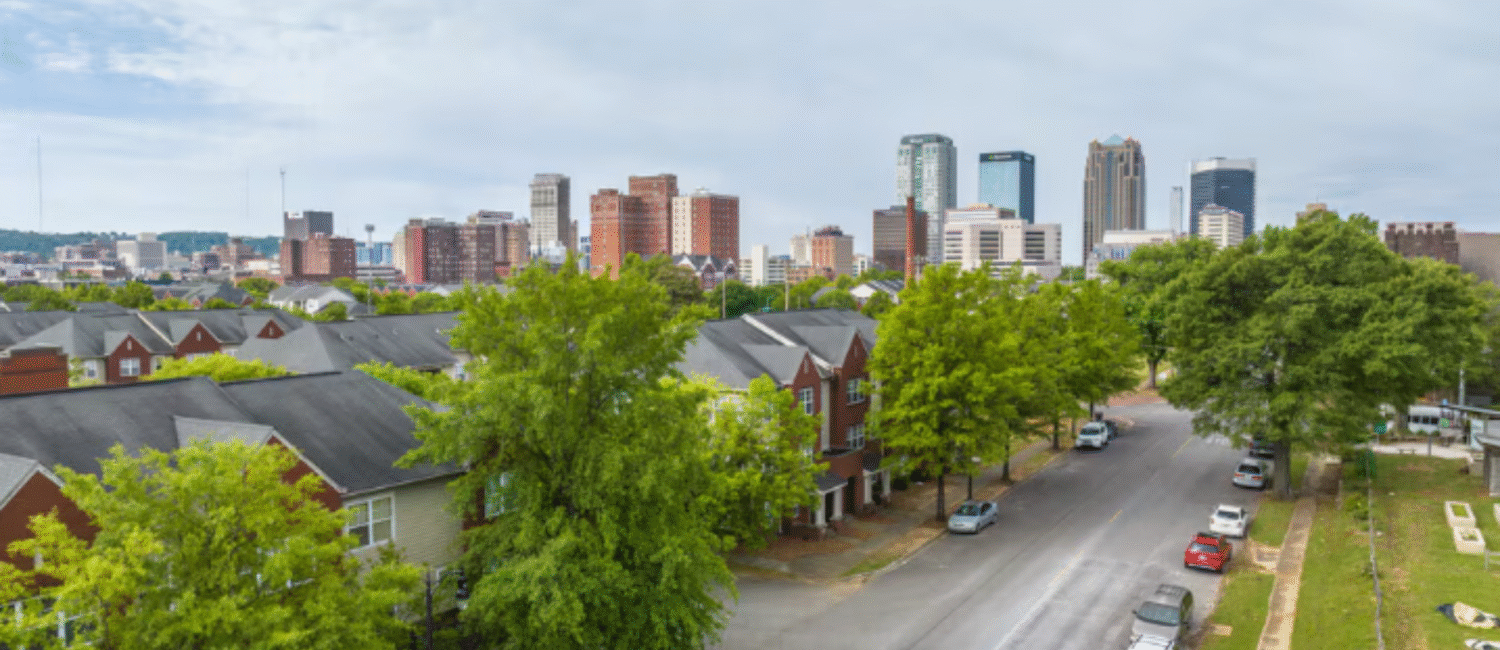
Consideration of BOLD proposals is weighted upon measurable community impact in one or more of the listed objectives and in one or more of the listed geographic priority areas:
City of Birmingham Funding
This funding is authorized under Mayor Woodfin’s FY 2027-2028 budget, which allocates up to $1,500,000 to IEO for this funding program, as amended. Upon receiving notice of an award, organizations will work with the Office of City Attorney to finalize an agreement, including a budget with clearly defined performance metrics and data sharing agreements. The City may structure agreements as loans at the City’s discretion, in which case performance metrics will be used to determine the requirement for repayment. Agreement terms and performance metrics shall be negotiated with BOLD finalists and shall be subject to City Council approval.
Agreements related to inclusive economic or industrial development as a result of this RFP will be awarded as professional service contracts pursuant to Amendment No. 772 to the Constitution of Alabama (1901) (Section 94.01(a)(3) of the Recompiled Constitution of Alabama) which authorizes the City to lend its credit to or grant public funds and things of value in aid of or to any corporation or other business entity for the purpose of promoting the economic or industrial development of the City.
Funding will be awarded on a competitive basis through a Request for Proposals (RFP) process. Applications are encouraged from Alabama non-profit organizations (IRC Section 501(c)(3) entities preferred), post-secondary education institutions, and relevant for-profit enterprises, particularly those with a social impact focus. Partnerships are encouraged, and groups of organizations may apply as a consortium of partners with a unified application. The funding amount of most BOLD awards ranges from $50,000 to $150,000, though compelling proposals of other funding amounts will be considered. All project funding must go toward serving only residents of the City of Birmingham and/or businesses with valid City of Birmingham business licenses. Funding will be awarded to organizations with missions that align with the City of Birmingham’s and IEO’s priorities.
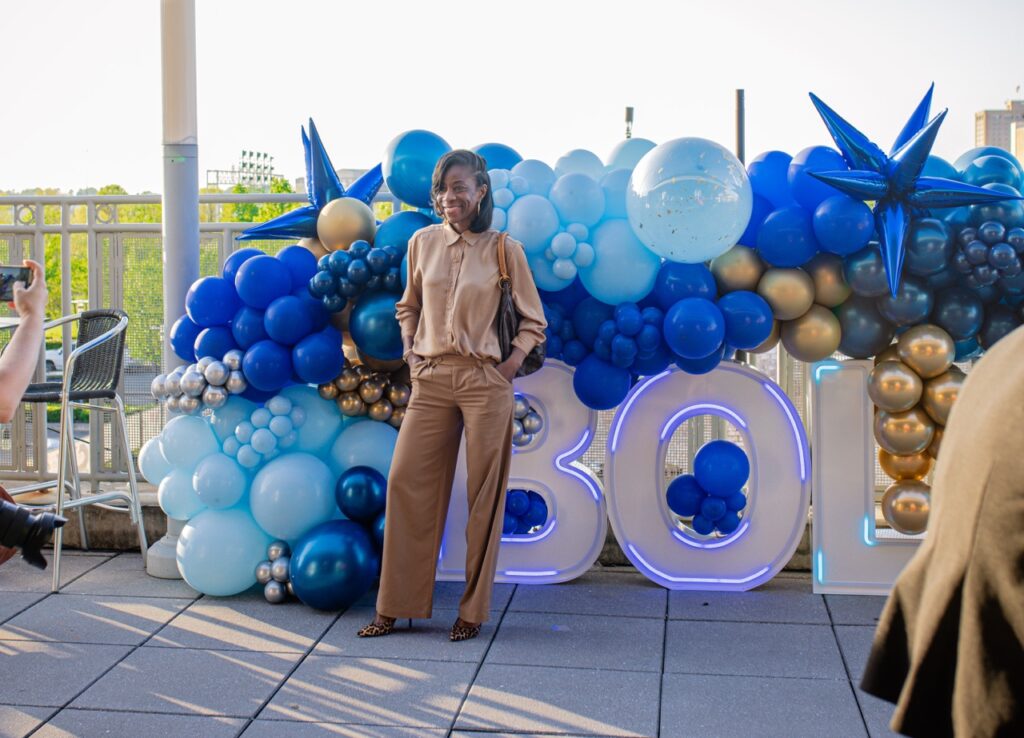
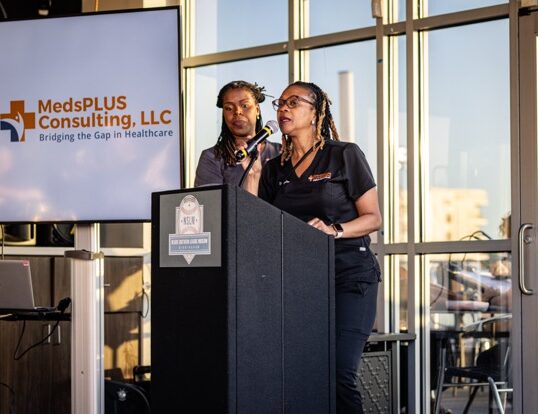
Organizations that currently receive other City of Birmingham funding are eligible to apply for BOLD. However, BOLD is intended to encourage new ideas, ensure wide impact across Birmingham’s diverse organizations, and foster investment in organizations for which a small amount of funding can allow organizations to scale and create a larger impact. Therefore, organizations that do not currently receive funding from other City of Birmingham sources may be considered more competitive in the application process. Additionally, the specific project that is proposed for BOLD funding cannot be supported by other City funding sources (i.e. the budget narrative for the proposal should not include other City of Birmingham funding sources).
Applicants that have previously received BOLD funding are eligible to apply. However, BOLD is intended to encourage new ideas and foster investment in organizations for which a small amount of funding can allow organizations to scale and create a larger impact. Therefore, new BOLD awardees may be considered more competitive in the application process.
A. Completed application consisting of a series of short response questions
A. Application Questions
To apply, each applicant must submit a form consisting of a series of short response questions. [Application will be linked here upon opening July 13, 2026]
B. Budget narrative
Applicants must download and complete the Budget Narrative Template as part of their application. See Template Here
Completed Budget Narratives can be submitted through the application form.
i. Leverage
Proposals should detail a cost matching plan in their budget narratives, with matching funds secured at a rate of 20% of the total project budget (not 20% of the amount of funds requested from BOLD). For example, if an application has a total project budget of $250,000, the proposal may request up to $200,000 from BOLD and provide the other $50,000 toward the project as leveraged funding. Proposals that do not meet the 20% leveraged funding requirement of the entire project budget will not be eligible for consideration.
Leveraged resources can be achieved by a commitment from the applicant or through various partnerships, public or private. However, leveraged funds cannot be sourced from other City of Birmingham funding. Eligible leveraged funding can be in the form of cash, inkind, or donated materials. Construction costs can count toward the overall leveraged costs. IEO will accept technical platforms as a leveraged resource. Existing staff salaries can count toward leveraged funding if a portion of their work is allocated to the proposed BOLD project and if the organization pays the employee with funds that are specifically used to run the proposed program. All personnel salaries associated with the project must meet or exceed a livable wage, which can be referenced through MIT’s living wage calculator. The City of Birmingham will also accept the quantified value of volunteer hours to the project. However, all leveraged funding for a proposal cannot be exclusively through personnel costs, overhead costs, and/or volunteer hours. Additionally, qualifying leveraged funding must go toward serving only residents of the City of Birmingham and/or businesses with valid City of Birmingham business licenses.
ii. Funding Restrictions
The BOLD funding program is intended to support programs, projects, and services that advance one or more BOLD objectives in Birmingham communities and support Birmingham residents as directly as possible. All project funding must go toward serving only residents of the City of Birmingham and/or businesses with valid City of Birmingham business licenses. It is also intended to support programs that are sustainable beyond the BOLD performance period. Therefore, proposals that utilize the majority (60% or more) of the funding request to support programming and direct services to Birmingham residents, rather than staff and operational costs, may be considered more competitive. If funding for personnel costs is included in project budget, either as a request for BOLD funding or as leveraged funding, it must meet or exceed a livable wage, which can be referenced through MIT’s living wage calculator.
Funding for construction will not be provided. However, construction costs can count toward the overall leveraged costs total. Any equipment over $5,000 will require prior approval from the IEO. All sub-contracts associated with the project must be submitted to IEO in the quarter in which they are executed. Lead partners are responsible for auditing the performance of subcontractors and guaranteeing compliance with reporting criteria.
C. Organizational status documentation
Applicants – or lead applicants for partnerships – will be asked to upload documentation to the application form that verifies their type of organization by providing a certificate of compliance from the state of domicile. In the event that applicants are not in possession of a certificate, a screenshot PDF of the applicant’s business entity record with the state of domicile will be accepted. For example, business entity records in Alabama can be accessed here.
D. Fiscal sustainability evidence
Applicants—or lead applicants for partnerships—will be asked to upload financial information to the application form to validate organizational capacity and fiscal sustainability. All applicants will be required to submit the following:
● Profit and Loss Statement
And:
● If a tax-exempt entity, IRS Form 990 or 990-N for previous fiscal year
● If a for-profit entity, a recent audit report (within the last two fiscal years)
E. Partner Memorandums of Understanding (MOUs), if applicable
If applicants include partner organizations in their proposals, lead applicants must provide MOUs that indicate the partner’s commitment and role in the proposal.
See the Partner MOU Template Here.
Completed Partner MOUs can be submitted through the application form.
F. Supplemental application materials
Additionally, applicants may feel the need to attach reasonably appropriate additional material relevant to the partnership or the application (i.e. letters of recommendation, organizational charts, organizational budgets, resumes of key staff, etc). These can be submitted through the application form.
Funding will be awarded to applicants whose programs demonstrate:
- A mission-oriented focus on building and growing a more inclusive economy in Birmingham
- Alignment with one or more BOLD objectives with a track record of working on the proposed objective(s)
- A focus on one or more of the BOLD geographic priority areas with a track record in the communities the applicants propose to serve
- Intimate understanding of the city’s economic landscape, including a data-defined problem and solution with measurable standards for success
- A compelling project plan to meet the proposal’s objectives, including work plan, budget narrative, and leveraged resources to complement any funding that could be awarded
- Apparent fiscal sustainability and capacity to execute on the scope of objectives outlined in the project narrative and project work plan
Applications open July 13, 2026, and close on August 13, 2026. All submissions must be received by 5:00 PM CST.
IEO wants every organization to have the resources to make their proposal as competitive as possible.
We’re offering office hours every Friday morning from 9a-12p!
Brainstorm proposals, ask questions, and receive one-on-one feedback. Don’t let the opportunity pass!
In order to give all organizations a chance to participate, please book only one office hours session per week.
Key Dates
July 13, 2026 – Issuance of RFP
July 16, 2026 • 2pm – Virtual – Public Information Session
Topics: Background on BOLD, Objectives, program overview, program timeline, eligibility, Application overview, Q&A
Featuring Office of Business Diversity and Opportunity, Senior Program Manager, Mo Shorts
July 23, 2026 • 2pm – Virtual – Proposal Workshop #1
How to complete the technical aspects of the application?
Discussion includes the activity description, professional and organizational qualifications, impact metrics and goals, and budget narrative.
Featuring Office of Business Diversity and Opportunity, Senior Program Manager, Mo Shorts
July 30, 2026 • 2pm – Virtual – Proposal Workshop #3
What does it mean to be a BOLD awardee?
Discussion will include the process before receiving an award (negotiations, transparency process, City Council approval, business licensing, etc) and process after receiving the award (reporting, demographic information collection, invoicing)
Featuring Department of Innovation and Economic Opportunity, Director, Coreata’ Houser
August 6, 2026 • 2pm – Virtual – Proposal Workshop #3
How to make your application competitive?
Topics include tips for the proposal summary, defining the problem and solution, and how scoring works for all sections.
Featuring Office of Business Diversity and Opportunity, Senior Program Manager, Mo Shorts
| Event | Date | |
|---|---|---|
| Phase 0 | Issuance of RFP | July 13, 2026 |
| RFP Information Session | July 16, 2026 | |
| Proposal Workshop #1 | July 23, 2026 | |
| Proposal Workshop #2 | July 30, 2026 | |
| Proposal Workshop #3 | August 6, 2026 | |
| Application Deadline | August 13, 2026 | |
| Phase 1 | Review of Written Applications | August 17 - 28, 2026 |
| Finalist Presentations (In-person) | September 15, 2026 | |
| Grantee Selections & Negotiations | September 21 - 25, 2026 | |
| Phase 2 | Review by Council Subcommittees | October 2026 |
| Review by Full Council | November 2026 | |
| Awardee Announcement | December 2026 | |
| Phase 3 | Performance Period | January 4, 2027 – January 3, 2028 |
| Selections will not be final until approved by the City Council. Selected projects will be reviewed by both the Economic Development Committee and Budget and Finance Committee of the City Council for approval, followed by approval by the full City Council. | ||
Frequently Asked Questions
Is there information on the impact of the BOLD funding program and the work of previous BOLD awardees?
Yes. The City of Birmingham is pleased to share the 5-year impact report of the BOLD funding program. You can access the report here.
Does IEO have a definition of inclusive development?
The City of Birmingham is committed to continuing to build a fairer, more equitable, and inclusive Birmingham. Birmingham has always been at the vanguard of human rights, and that history extends to the City of Birmingham’s posture toward every community in Birmingham – and particularly the communities that are the most vulnerable and historically marginalized, such as women, people with disabilities, and Black, LGBTQ, homeless, and justice-involved Birmingham residents. As a result, the City of Birmingham, as a matter of public policy, encourages the participation, access, and service of minority-, women-, and disadvantaged business enterprises (MWDBEs) and communities to the maximum extent possible.
The Department of Innovation and Economic Opportunity (IEO) shares this vision in our pursuit of a resilient and inclusive economy in Birmingham. Informed by Nobel Prize winning economist and philosopher Amartya Sen, IEO sees development as the removal of major sources on unfreedom: poverty as well as tyranny, poor economic opportunities as well as systemic deprivation, neglect of public facilities as well as intolerance or overactivity of repressive governments. This means that development in general, and economic development in particular, starts by recognizing that some populations have been marginalized and “unfree” throughout history. IEO sets and tracks goals for supporting these communities and advancing an inclusive economy, reflecting a commitment to intergenerational and social mobility, equity-driven human capital formation and strategic investments for innovation and productivity. Through the Office of Business Diversity and Opportunity, IEO also engages in place-based development to grow small business; support minority-, women-led, and disadvantaged business enterprises (MWDBEs); and spur neighborhood investment to ensure inclusive growth in Birmingham.
Can I apply if my organization is currently receiving BOLD funding and/or other City of Birmingham funding, or if my organization has in the past?
Yes. Organizations that currently receive or have received BOLD funding or other City of Birmingham funding are eligible to apply. However, BOLD is intended to encourage new ideas, ensure wide impact across Birmingham’s diverse organizations, and foster investment in organizations for which a small amount of funding can allow organizations to scale and create a larger impact. Therefore, organizations that do not currently receive funding from City of Birmingham sources may be considered more competitive in the application process. It is also important to note that the specific project that is proposed for BOLD funding cannot be supported by other City funding sources (i.e. the budget narrative for the proposal should not include other City of Birmingham funding sources).
Additionally, new BOLD awardees may be considered more competitive in the application process. If applicants have received BOLD funding previously, applicants are encouraged to demonstrate in their proposals any new and innovative ideas that build on previous BOLD programming to demonstrate how they will better serve Birmingham residents with more BOLD funding.
Are there any limitations towards the use of funds in regards to programmatic costs versus operational costs?
The BOLD funding program is intended to support programs, projects, and services that advance one or more BOLD objectives in Birmingham communities and that support Birmingham residents as directly as possible. It is also intended to support programs that are sustainable beyond the BOLD performance period. Therefore, proposals that utilize the majority (60% or more) of the funding request to support programming and direct services to Birmingham residents, rather that staff and operational costs, may be considered more competitive.
Can I apply if my project doesn’t align with an objective?
Objectives #4 and #6 are the broadest in nature, aimed at surfacing community needs and new solutions for addressing them. These categories are a good fit for proposals that do not fit clearly within other objectives. But remember: projects must provide programming and/or services to Birmingham residents that address barriers to economic opportunity and social mobility. Additionally, organizational track record and community impact related to the selected objective will be considered when reviewing applications.
Can I select multiple objectives if my program aims to accomplish more than one?
Yes. However, keep in mind that competitive proposals will demonstrate a clear focus on and track record in each objective selected. Therefore, applicants are encouraged to only select the objective(s) for which they can demonstrate clear focus and track record.
Can I select multiple geographic priority areas if my program aims to accomplish more than one?
Yes. However, keep in mind that competitive proposals will demonstrate a clear focus on and track record in each geographic priority area selected. Therefore, applicants are encouraged to only select the geographic priority area(s) for which they can demonstrate clear track record and a plan for intentional impact. Applicants are discouraged from selecting all geographic priority areas, even if proposals are generally open to all of Birmingham, unless applicants have a specific plan for reaching and track record of serving every geographic priority area.
What is considered “leveraged funding”?
“Leveraged” funds are simply a financial commitment toward the overall project budget from a source other than the awarding organization (I.e. the City of Birmingham). Leveraging can be achieved by a commitment from the applicant or through various partnerships, public or private. However, leveraged funds cannot be sourced from other City of Birmingham funding.
The required leveraged funding for the BOLD funding program is 20% or more of the entire project budget (NOT the BOLD funding request amount). For example, if a proposal’s entire project budget is $250,000, the application may seek up to $200,000 from BOLD and should clearly indicate in the budget narrative how it will provide $50,000 toward the project objectives. Proposals that do not meet the 20% leveraged funding requirement of the entire project budget will not be eligible for consideration.
Eligible leveraged funding can be in the form of cash, in-kind, or donated materials. Construction costs can count toward the overall leveraged costs. IEO will accept technical platforms as a leveraged resource. Existing staff salaries can count toward leveraged funding if a portion of their work is allocated to the proposed BOLD project and if the organization pays the employee with funds that are specifically used to run the proposed program. IEO will also accept the quantified value of volunteer hours to the project. However, all leveraged funding for a proposal cannot be exclusively through personnel costs, overhead costs, or volunteer hours.
What types of resources are not allowable as leverage?
The purchase of facilities or buildings are unallowable as leverage. The donation of a building or property as a third party in-kind contribution is unallowable as leverage. Funding from other City of Birmingham sources is unallowable as leveraged funding.
If you have multiple companies, can you apply with three separate companies?
Yes, you can propose multiple projects for BOLD funding from one organization and/or a single proprietor with multiple organizations – so long as the activities and goals associated with the proposed projects are distinct from each other. Consideration of BOLD funding allocation is based on the eligibility of the organization and the quality of the proposal(s)
Can startups apply?
Yes, startups are encouraged to apply. It is important to note that track record, fiscal sustainability, and organizational capacity to execute the proposed project are considered in the BOLD application review process, however. Startups are encouraged to particularly emphasize these aspects of their projects, where applicable, therefore, even if these aspects are demonstrated creatively (e.g. track record at the staff level, rather than at the organizational level).
Can new non-profits apply?
Yes, new non-profits are encouraged to apply. It is important to note that track record, fiscal sustainability, and organizational capacity to execute the proposed project are considered in the BOLD application review process, however. New organizations are encouraged to particularly emphasize these aspects of their projects, where applicable, therefore, even if these aspects are demonstrated creatively (e.g. track record at the staff level, rather than at the organizational level).
Can a non-profit start a new project in one of the geographic priority areas?
Yes, an organization can propose a new project in one of the geographic priority areas. It is important to note that previous track record and engagement with the geographic priority area will be considered, however, including the location of the organization, staff experience in the locale, civic engagement, and a history of success with the community that projects propose to serve. This can be demonstrated by the lead applicant and/or project partnerships.